A unified hospital system for patient records, scheduling, billing, and reporting
Jul 28, 2025
Overview
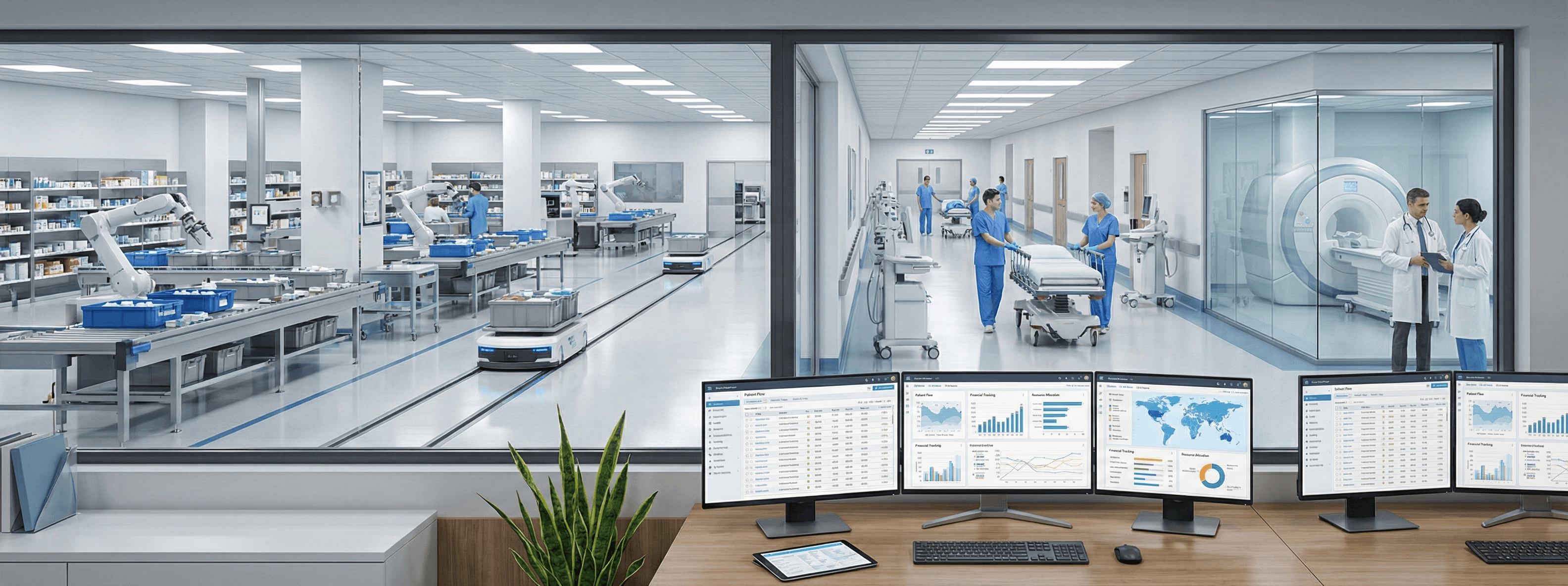
A single platform that connects patient records, department workflows, scheduling, billing, and reporting — replacing paper-heavy processes and reducing admin bottlenecks.
Industry
Healthcare Operations / Healthtech
Project Type
End-to-end hospital operations platform (custom build)
Duration
90 days from discovery to launch.
Overview
The facility relied on manual processes and fragmented records across departments. Staff spent time reconciling paperwork instead of moving patients through care. Billing accuracy suffered because admin workflows didn’t reflect clinical reality.
We built a unified system that centralizes patient records, automates routine workflows, and connects scheduling with billing and credit management — supported by real-time reporting for admins.
Challenges
Fragmented Patient Data: Information was siloed across various departments, preventing a single source of truth for patient history.
Manual Process Dependency: Heavy reliance on manual tasks resulted in slow administrative throughput and increased the risk of human error.
Clinical and Administrative Disconnect: Administrative workflows were often out of sync with clinical realities, leading to operational friction.
Unreliable Tracking: The lack of a unified system made it difficult to track patient history accurately and maintain financial records.
High Staff Workload: Administrative burdens and inefficient processes contributed to significant pressure on the facility's personnel.
Service Delivery Delays: Operational inefficiencies directly impacted the speed at which care could be provided to patients.
Solution
Built a unified hospital operations system that centralizes patient records, connects scheduling and billing, and gives administrators real-time reporting. Designed to reduce manual work and improve accuracy across departments
System design + workflow mapping
We began with a discovery phase to map out clinical and financial workflows. This ensured the roadmap focused on replacing high-friction manual tasks with automated digital solutions that serve both doctors and administrators.
Architecture: single source of truth
Our team built a centralized system that provides instant, cross-departmental access to patient records. By unifying these data points, we ensured that clinical realities and administrative tasks remain synchronized in real-time.
Automation + billing sync
During the development phase, we automated routine scheduling and integrated billing with credit management modules. This synchronization ensures financial accuracy is maintained automatically as care is delivered.
Stabilize, test, launch
Following UAT, testing, and fixing operational edge cases, the system launched with built-in reporting tools. These tools allow administrators to make data-driven decisions based on real-time insights rather than relying on delayed paper trails.
Related: [MVP Development]
Results
Reduced Patient Wait Times: Faster patient flow, reduced admin bottlenecks, improvement in patient care speed.
Enhanced Care Coordination: Unified records allowed for better synchronization between clinical teams.
Automated Administrative Tasks: Workflow automation significantly decreased the administrative workload for staff.
Billing Accuracy: Improved billing accuracy through connected workflows, eliminating common errors
Digital Transformation: Successfully replaced fragmented paper trails with a centralized, real-time data insights.
Data-Driven Decision Making: Better coordination across departments enabling admins to make informed operational choices using Real-time reporting tools.
"By unifying our clinical and administrative workflows into a single digital system, we have fundamentally changed how our facility operates. Patient wait times reduced and care coordination improved immediately after launch. The transition from fragmented paper trails to real-time data insights has not only decreased our administrative workload but also secured our financial accuracy through integrated billing. This digital transformation has finally connected our administrative tasks with our clinical realities."
With the core system successfully launched and maintained after Day 90, the facility is now positioned to iterate on its digital capabilities. The shift from manual processes to a unified digital architecture provides the necessary foundation for future enhancements, such as advanced data analytics or the integration of AI for predictive patient care. The organization is no longer slowed down by paper-based bottlenecks and can focus its resources on improving patient outcomes and expanding its service offerings.
Related: SaaS platforms (end-to-end)